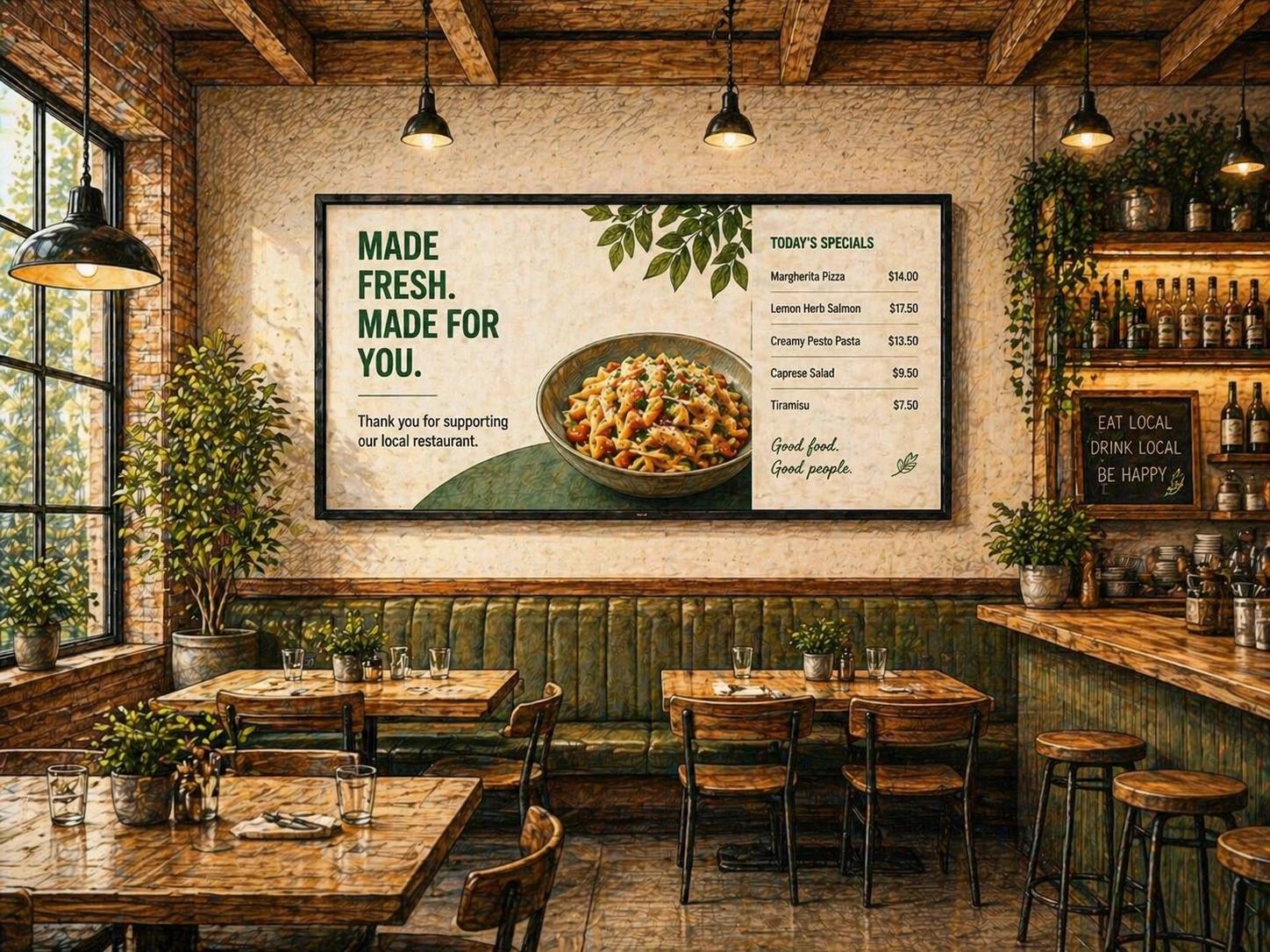
In today’s fast-paced restaurant industry, digital signage has become one of the most effective tools for improving customer experience, streamlining operations, and boosting sales. Whether it’s a dynamic menu board, a drive-thru screen, or a lobby display, digital signage gives restaurants a modern edge and the flexibility to adapt instantly to customer needs and real-time conditions.
This guide explores the benefits of digital signage in restaurants, how it works, and why tools like HipDeck make managing screens effortless for restaurant owners.
What Is Digital Signage for Restaurants?
Digital signage refers to the use of digital displays—such as TVs, tablets, or monitors—to present menus, promotions, videos, and real-time updates to customers. Instead of static printed boards or posters, content is managed through a cloud-based digital signage system, allowing restaurant owners to control what appears on every screen in real time.
Common use cases include:
- Digital menu boards behind the counter
- Drive-thru menu displays
- Self-order kiosks or tablet menus
- Waiting-area entertainment screens
- Kitchen and back-of-house communication boards
- Brand storytelling and promotional video walls
With digital signage software, restaurants can update menus instantly, schedule content for different times of day, and even automate promotions based on day-parts or inventory levels.
Why Restaurants Are Switching to Digital Signage in 2026
Digital signage is no longer just a trend—it’s becoming standard in modern restaurant operations. Here’s why thousands of restaurants are making the switch.
1. Real-Time Menu Updates and Easy Content Management
Printed menus are costly, slow to update, and inflexible. With digital menu boards, you can change items, prices, or promotions instantly from a central dashboard.
For example, a breakfast menu can automatically switch to lunch at 11:00 a.m., or a sold-out dish can disappear from the menu within seconds. This ensures accuracy, flexibility, and better communication between the kitchen and customers.
Statistic: Restaurants using digital menu boards save up to 80% on menu reprinting costs and reduce update time from hours to seconds.
2. Boosting Sales and Upsells Through Visual Marketing
Dynamic visuals sell. Studies show that digital menu boards can increase sales by up to 25%, especially for high-margin items like beverages, desserts, and add-ons.
Bright, motion-enhanced displays draw attention to combos, daily specials, and limited-time offers—turning screens into automated upsell tools that drive impulse purchases.
Restaurants can also schedule promotional slides based on time of day, weather, or events—like showing hot drinks on cold mornings or ice cream specials in summer.
3. Enhancing Customer Experience and Reducing Wait Times
Customers today expect fast, intuitive, and visually engaging experiences. Digital signage not only modernizes your restaurant but also improves perceived wait times by showing engaging visuals, videos, or interactive content while customers queue or wait for pickup.
A well-designed menu layout improves decision speed, making lines move faster and customers happier. In fact, digital displays can reduce perceived waiting time by 25–30% while elevating the brand’s overall feel.
4. Strengthening Brand Identity and Storytelling
Digital signage offers a creative canvas to tell your restaurant’s story.
From showing how ingredients are sourced to behind-the-scenes kitchen moments or customer testimonials, every screen becomes a chance to build brand loyalty.
Restaurants can display social media feeds, special events, or chef introductions to connect with customers emotionally—and turn one-time diners into repeat guests.
5. Operational Efficiency and Centralized Control
For multi-location chains or franchises, keeping menus consistent across stores can be a nightmare. Digital signage networks make this simple: content updates can be pushed to all stores simultaneously while still allowing regional flexibility.
When integrated with POS or inventory systems, digital signage can automatically hide unavailable items, sync pricing, or trigger limited offers based on stock levels—saving staff time and reducing manual errors.
6. Cost Savings and Sustainability
While there’s an upfront investment, digital signage drastically cuts printing costs, labor hours, and waste. No more paper menus, seasonal posters, or reprints for small updates. Over time, this results in thousands of dollars saved annually—while also reducing your environmental footprint.
Best Practices for Restaurant Digital Signage
To get the most from your digital signage investment, keep these key practices in mind:
- Use high-brightness screens for outdoor or drive-thru locations (2,500–4,000 nits).
- Design clear, readable menus—avoid clutter and use high-contrast colors.
- Schedule content based on time-of-day or audience.
- Incorporate motion to attract attention without overwhelming viewers.
- Integrate with POS or inventory to keep data accurate.
- Measure success with metrics like order size, conversion rate, and dwell time.
- Keep content fresh—rotate designs regularly to avoid “signage fatigue.”
Challenges Restaurants Face with Digital Signage
While the benefits are clear, there are still challenges to overcome:
- Content management — Without a good platform, keeping screens updated becomes tedious.
- Hardware downtime — Poor connections or failed devices can cause blank screens.
- Training needs — Staff must understand how and when to trigger updates.
- Upfront costs — Entry-level investments can be intimidating, but ROI comes fast when done right.
That’s where platforms like HipDeck make all the difference.
HipDeck: The Digital Signage Solution for Modern Restaurants
Managing digital signage shouldn’t require technical expertise—and with HipDeck, it doesn’t.
HipDeck is a cloud-based digital signage platform built for restaurants that want to control content, schedules, and playlists across multiple screens and locations—all from one simple dashboard.
How HipDeck Helps Restaurants
✅ Instant Menu Updates
Easily upload or edit menu items, prices, or promotions and push them live within seconds—no USBs, no manual updates.
✅ Automated Scheduling
Set breakfast, lunch, and dinner menus to change automatically based on time. Plan specials weeks in advance with calendar-based scheduling.
✅ Multi-Screen Control
Manage every screen across all your restaurants from a single, intuitive interface. Ideal for franchises and multi-location brands.
✅ Real-Time Content Delivery
Show new deals, hide sold-out dishes, or feature a chef’s special instantly. HipDeck supports real-time sync so your screens are always accurate.
✅ Offline Support for Reliability
Even if your internet connection drops, HipDeck keeps your menus running seamlessly until you reconnect.
✅ POS and Inventory Integration (Optional)
Connect to your POS or inventory system so your menu boards automatically reflect what’s available in real time.
✅ Custom Templates & Branding
HipDeck comes with prebuilt, high-quality menu templates optimized for readability and sales conversion, all easily customizable with your brand colors and logos.
✅ Scalable for Any Restaurant Size
From single cafes to nationwide franchises, HipDeck scales effortlessly to handle hundreds of displays.
✅ Affordable Pricing & Quick ROI
Reduce printing costs, eliminate signage downtime, and increase upsells—all with a digital signage solution that pays for itself fast.
In short: HipDeck turns restaurant screens into powerful, profit-generating marketing tools.
Manage all your screens. Update instantly. Boost sales—effortlessly.
Why Digital Signage + HipDeck = Smart Business
Restaurants that adopt digital signage through platforms like HipDeck see immediate benefits:
- Higher average order value thanks to strategic upselling
- Reduced staff stress from manual menu changes
- Improved customer satisfaction with fast, clear menus
- Consistent brand experience across all screens and locations
- Lower operational costs from eliminated print materials
Whether you’re a local café or a fast-casual chain, digital signage powered by HipDeck delivers both visual appeal and operational power.
Future Trends in Restaurant Digital Signage
As technology evolves, restaurants can expect even more advanced digital signage capabilities in 2026 and beyond:
- AI-driven recommendations: Tailor menu suggestions based on real-time data and weather.
- Touchless ordering and QR menus: Combine signage with mobile interactivity.
- Social media integration: Display live reviews, ratings, or user-generated content.
- Dynamic pricing: Automatically adjust prices based on demand and stock levels.
With these innovations, the restaurants that invest in scalable, flexible signage systems now—like HipDeck—will have a major competitive advantage.
Final Thoughts
Digital signage in restaurants isn’t just a modern convenience—it’s a business strategy. It drives sales, improves operations, and delivers the fast, visual experiences customers expect.
Platforms like HipDeck make it simple, affordable, and scalable for any restaurant to join the digital revolution.
If you’re ready to replace outdated posters and static menu boards with a solution that updates instantly, engages customers, and grows your revenue—HipDeck is your next step.
👉 Visit HipDeck.co to learn how digital signage can transform your restaurant today.